
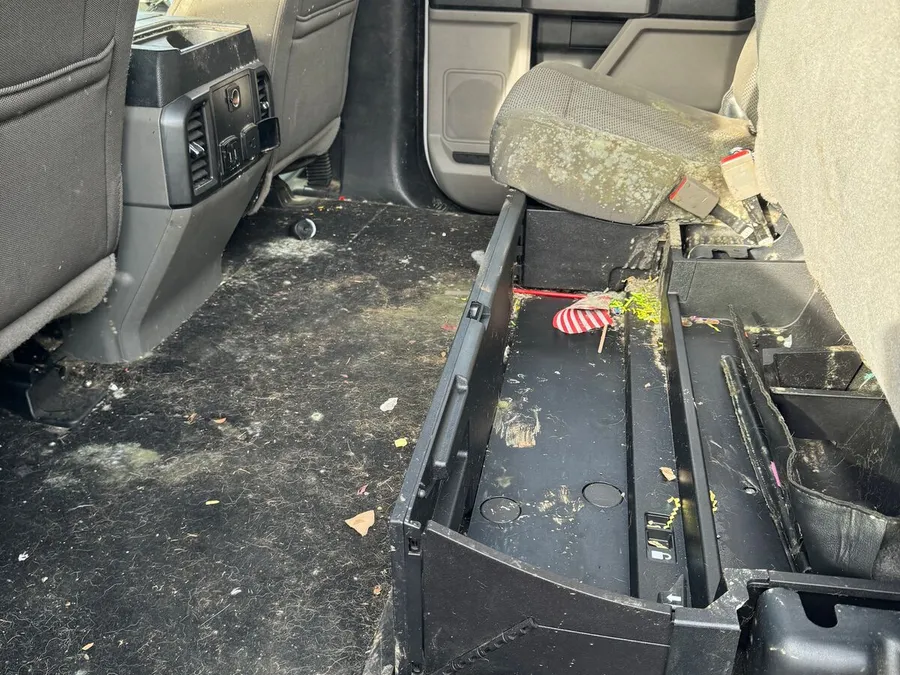
Mold in a car almost always starts with water that never dried. A floor mat that stays damp. A door or window seal that leaks, a plugged sunroof drain, a wet jacket left on the back seat for a week.
So the cleaning is only half of it. If the water keeps getting in, the mold comes back.
How to Get Rid of Mold in a Car Yourself
The EPA’s mold and moisture guide is written for houses, but the method is the same in a car. A small patch on a hard surface, like a door panel or a piece of plastic trim, you can usually handle.
- Park outside and open every door. You want the spores leaving the car, not settling somewhere else in it.
- Put on an N-95 mask, gloves and goggles. The EPA recommends all three, and says not to touch mold with bare hands.
- Take out the floor mats and anything else that’s wet or loose.
- Scrub the mold off hard surfaces with detergent and water.
- Dry everything completely. The EPA says to dry water-damaged areas within 24 to 48 hours.
- Find where the water came in and fix it.
Spraying a mold killer on it isn’t enough. The EPA notes that dead mold can still cause allergic reactions, so it has to come off, not just die. The agency doesn’t recommend bleach as a routine part of cleanup either. If you use it anyway on a hard surface, the CDC says no more than 1 cup in a gallon of water, and never mixed with ammonia or other cleaners. Keep it off carpet and upholstery, where it takes the color out.
For the leak, Consumer Reports has a short list of the usual causes: water leaks, blocked AC drains and a cabin air filter nobody changed. On a car with a sunroof, check the drains for leaves. Clear them gently. The magazine warns against the online tutorials that tell you to blast them with compressed air.
How to Get Mold Out of Car Carpet
Carpet is the hard part. It soaks up water, and the top can feel dry while the padding underneath is still wet. Lift the mats and press down hard with your palm. If water comes up, a surface cleaning won’t fix it.
The EPA is blunt about carpet. It says absorbent materials like carpet may have to be thrown away if they become moldy, because mold grows into the empty spaces and can be difficult or impossible to remove completely. It also lists the underside of carpet and the pad as places mold hides.
If the carpet got damp but dried quickly, and the mold is light and on the surface, start with the mats. Consumer Reports suggests taking them out and shampooing them. Baking soda sprinkled on before you vacuum helps with the smell, but only on dry carpet. On wet carpet it clumps.
If the pad is wet, the carpet usually has to be lifted so both layers can dry, and sometimes it has to be replaced. That’s the point where most people bring it to us. We extract the moisture from carpet and upholstery, dry the affected areas, and remove what’s contaminated. A carpet shampoo on its own starts at $75.
How to Get Mold Out of Car Seats
Vinyl seats clean up like any other hard surface: detergent, water, a brush for the seams, then dry them all the way. Leather needs a gentler cleaner so you don’t damage the finish.
Cloth seats are closer to carpet. There’s foam under the fabric, and foam holds water the same way a carpet pad does. A seat that had a few spots after a damp week can be shampooed. A seat that sat wet, from a window left down or a leak overhead, may be moldy inside where you can’t reach.
Check the seat belts too. Pull each one all the way out and look at the part that normally stays rolled up.
Our interior detail shampoos the seats, seat belts, carpet, mats and trunk. A seat shampoo by itself starts at $45 per seat.
Getting the Mold Smell Out of a Car
A musty smell with no mold in sight means something is still damp. The EPA says to suspect hidden mold when a place smells moldy and you can’t find the source.
Start with the carpet pad and the trunk, including the spare tire well. Then think about the air conditioning. Consumer Reports explains that the smell is often condensation sitting on the evaporator inside the heating and cooling system. A new cabin air filter is the cheap first step. It’s usually behind the glove box.
Air fresheners don’t work on this. Fragrance alone does not remove an odor. The source has to come out first, and then the air and vents can be treated. At our shops that’s an ozone odor treatment, which starts at $75.
Consumer Reports’ advice is that if the smell doesn’t go away, it’s time for a detailer or a mechanic.
When Car Mold Is a Health Problem or Needs a Shop
The CDC says damp and moldy places can cause a stuffy nose, sore throat, coughing or wheezing, irritated eyes or a skin rash. Some people get none of that. People with asthma or a mold allergy may have severe reactions, and people with weakened immune systems or chronic lung disease can get lung infections. If anyone like that rides in the car, don’t let it wait.
You don’t need the mold tested. The CDC doesn’t recommend testing, because whatever type it is, it has to be removed.
Bring it in if the seats or carpet are soaked, if there’s mold on the headliner or under the seats, or if the smell is back a few days after you cleaned. Flood water is its own case. The EPA says damage from sewage or other contaminated water calls for a professional.
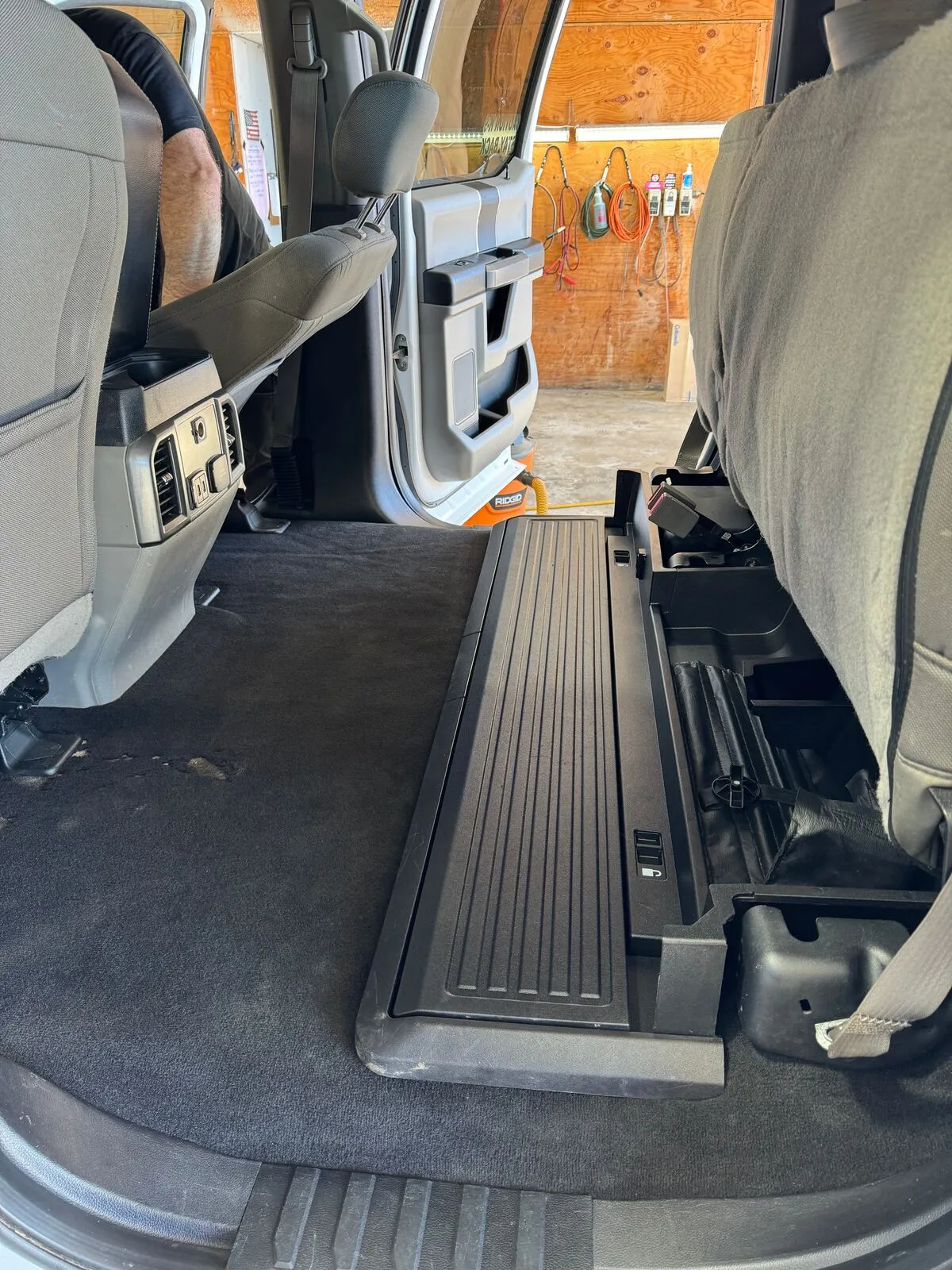
The same pickup as the photo at the top of this page, after its mold cleanup at our shop.
When a car comes to us with mold, we find and fix the moisture source first. Then we contain the area, remove what’s contaminated and clean the surfaces that can be cleaned. On the worst ones we take the entire interior out and replace what the mold or water ruined. Car mold removal starts at $150, and every job starts with an inspection.
If the water came from a flood or a leak, ask about insurance. For mold, flood and water damage, we can work directly with your insurance company and manage the claim process on your behalf.
Why Cars Mold in Salem, and How to Prevent It
The National Weather Service says nearly 90 percent of Salem’s yearly rainfall falls between early October and mid-May. For most of that stretch, whatever gets wet inside a car stays wet.
Prevention is mostly about not leaving water in there. Take wet coats, umbrellas and gym bags inside with you. Pull the floor mats out to dry when they’re soaked. When the windows fog on the inside every morning, something in the car is damp, and it’s worth finding out what.
Fix leaks when you first notice them. Oregon State University’s mold guidance puts it simply: unless the moisture problem is fixed, mold will probably grow again.
If the car just smells a little stale and you can’t find any mold, an interior detail is the place to start. Our prices are posted, and either shop can take a look.
Parking an RV or boat for the winter? The same moisture rules apply, and our boat and RV detailing covers interiors too.