Buy a used car that belonged to a smoker and you find out fast that a pine tree on the mirror does nothing. Two days later the cabin smells like cherry spray mixed with stale cigarettes.
Fragrance alone never removes an odor. Smoke leaves a sticky layer of tar and residue on glass, plastics, fabrics, seat belts, the headliner and the inside of the air vents. Until that film comes off, the smell returns every time the car sits in summer sun or you turn the heater on during a cold Salem morning.
Why Smoke Smell Keeps Coming Back
Smoke doesn’t just float out a cracked window. It settles onto every surface in the cabin.
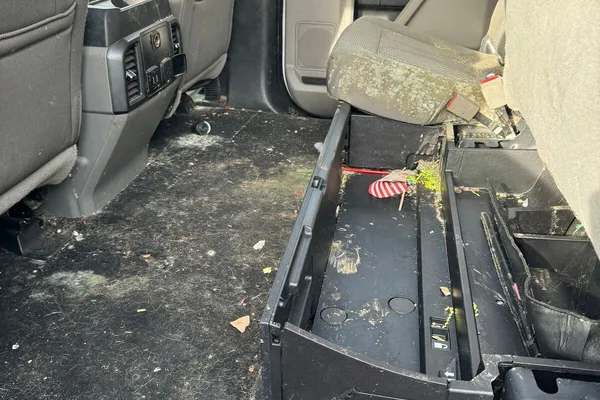
Wipe the inside of a smoker’s windshield with a white paper towel and you’ll see yellow-brown film right away. That same film coats the dash, door panels, steering wheel, center console, upholstery, carpet fibers and the headliner right above the driver’s seat.
It also gets pulled straight into the heating and air conditioning ducts whenever the fan runs on recirculation. The cabin air filter traps part of it, while the rest sticks to the ducts and evaporator housing. Shampoo the seats without touching the glass, filter and vents, and the odor blows right back the second you hit the defroster.
How to Get Smoke Smell Out of a Car Yourself
Light smoke from a trip or two you can usually tackle at home on a dry afternoon. Work from the top down so dirty cleaner doesn’t drip onto finished panels.
- Empty the entire vehicle, including the glove box, center console, door pockets, under-seat trays, trunk and any ashtrays. Pull the floor mats out completely.
- Vacuum slowly across every seat seam, headrest, carpet, mat and seat track to pull out loose ash and soot.
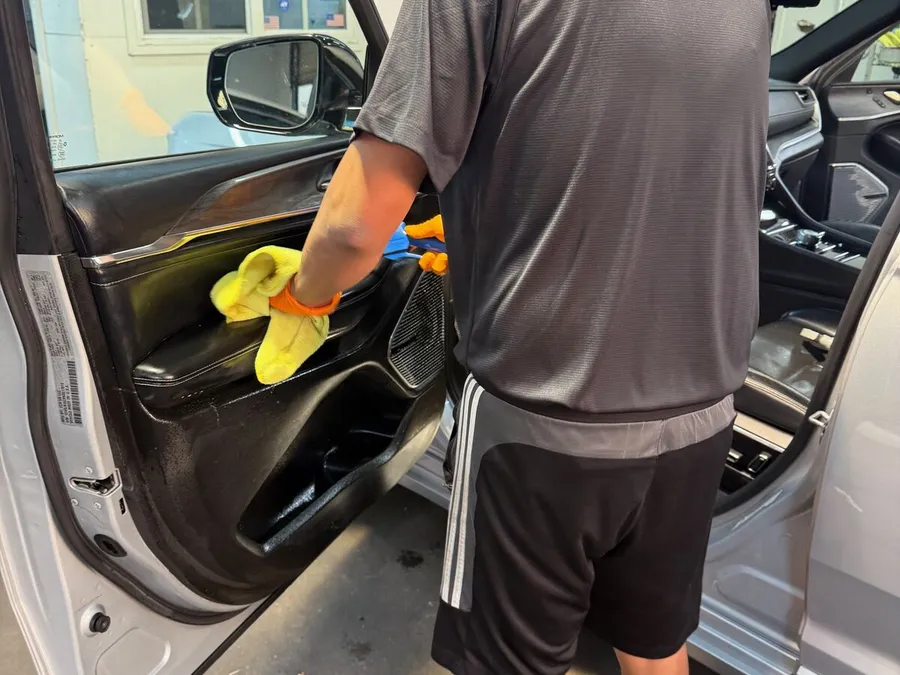
- Wipe down every hard surface with an automotive interior cleaner and clean microfiber towels. Hit the dash, steering wheel, column stalks, shifter, door panels, cup holders, seat backs and sun visors, switching towels as they turn brown.
- Clean the inside of every window, including the back glass and sunroof, using an ammonia-free glass cleaner so you don’t damage window tint or touchscreens.
- Shampoo fabric seats, carpets, floor mats and seat belts with an upholstery cleaner, or clean leather seats gently with a dedicated leather cleaner and conditioner.
- Replace the cabin air filter. Consumer Reports points out that a dirty cabin air filter is one of the most common reasons odors keep returning inside a car.
- Leave the doors open in dry air so every damp seat and carpet dries out completely.
Watch out for the headliner. Most headliners are thin fabric glued over foam backing. Soak the ceiling with cleaner or scrub hard with a brush, and the glue can let go and sag. Mist cleaner lightly onto a microfiber towel and blot gently instead.
Don’t close the car up wet. If you park in Salem during a damp fall or winter and leave seats damp after shampooing, you can trade smoke smell for mildew. Our guide on how to get rid of mold in a car explains how fast trapped moisture turns into mold.
Vents, Ducts and Hidden Residue
Even thorough home cleaning misses two stubborn spots: the air ducts and the foam inside the seats.
Every time a smoker drives with the fan running, smoke passes through the cabin filter and coats the ductwork. Swapping the filter stops fresh air from pulling through old smoke particles, and wiping the vent louvers cleans what you can see, though deeper duct film often takes dedicated ventilation-system cleaning and deodorizing.
Don’t skip the seat belts. Pull each belt all the way out to the stop, clip it open, and clean both sides of the webbing. That fabric sits inches from your face every drive and holds tobacco odor stubbornly.
When Ozone Treatment Helps and When It Doesn’t
Once the sticky film is scrubbed and extracted from the cabin, ozone treatment reaches places a towel can’t. Ozone gas moves through air vents, under carpet edges, into seat seams and inside porous trim to neutralize leftover odor molecules.
Order matters. Run an ozone machine in a car still coated in nicotine film and ash, and the relief won’t last. Deep cleaning comes first. Ozone comes second.
Safety matters too. The EPA’s guidance on ozone generators explains that ozone is irritating to the lungs and should never be used in an occupied space. A vehicle has to stay closed and empty during treatment, then get opened and aired out thoroughly before anyone drives it.
Not every bad cabin odor is tobacco. If a previous owner had both cigarettes and pets, or spilled milk under a seat, the approach changes. For organic odors like pet accidents, urine, milk, food spills or blood, we use Bio-Zap enzyme treatment to break down the source before ozone clears the air and vents.
When a Used Car Needs Shop-Level Smoke Removal
Five or ten years of smoking inside a car is a different job than an occasional cigar. Heavy tobacco residue works deep into headliner foam, seat cushions, carpet padding and AC ductwork.
At Willamette Auto Detail, smoke, tobacco and car odor removal combines source removal, deep cleaning of fabrics, plastics, headliners and glass, ventilation-system cleaning and specialized deodorizing. We tell customers straight before we start: severe contamination may need repeated service or replacement of badly saturated materials.
For smoke damage from a fire or another qualifying incident, we can also work directly with your insurance company and manage the claim process on your behalf, coordinating documentation, communication and cleanup.
Smoke and Odor Removal Pricing in Salem, Oregon
Both of our Salem shops handle smoke and odor work, on Lancaster Dr NE and Aumsville Hwy SE.
Standard interior cleaning starts with an Interior Detail at $225 for compact cars, $275 for midsize vehicles, $325 for full-size trucks, SUVs and minivans, and $395 for oversized vehicles. Ozone odor treatment starts at $75, and Bio-Zap enzyme treatment starts at $85.
Heavy smoke contamination, or jobs where seats, carpet or trim have to come out, take extra labor. We inspect the interior first and walk through the exact price before work begins. Standard package rates are posted on our All Prices list, and our post on how much car detailing costs covers how condition affects the final quote.
Bring the vehicle by Lancaster Dr NE at (503) 585-6681 or Aumsville Hwy SE at (503) 743-1110, or send details through our contact form to set up an inspection.