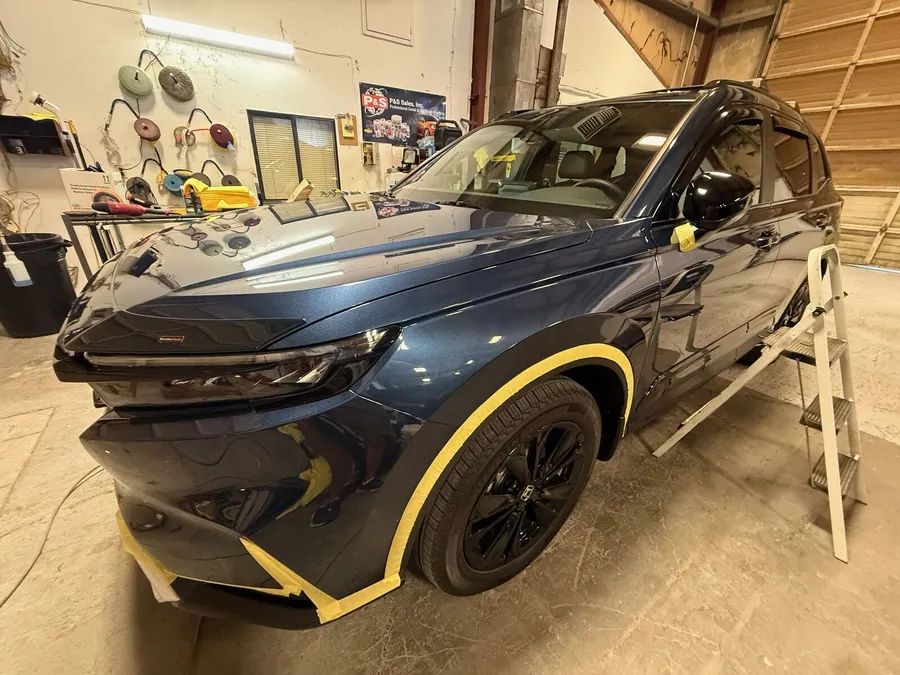
Walk past a dark car in bright sun and you’ll often see fine spiderweb rings radiating around the reflection. Those are swirl marks. Washing doesn’t remove them, and a quick coat of wax only masks them for a couple of weeks.
Paint correction actually takes those defects out. Instead of filling scratches with oils or glaze, a detailer uses machine polishers, foam or microfiber pads and carefully chosen compounds to level a thin layer of the clear coat until the surface reflects light cleanly again.
What Paint Correction Fixes and What It Cannot
Modern automotive paint sits in layers: bare metal or plastic, primer, a thin color base coat, and a transparent clear coat on top. Most light damage lives in that top clear layer.
Paint correction handles defects inside the clear coat. That includes wash swirls, light scratches, haze, dull oxidation, mild water-spot etching and light marks left behind after tree sap or bird droppings come off.
It can’t fix damage that cuts all the way through the clear coat. Rock chips on the hood, deep key scratches, peeled clear coat and scuffs down to primer or metal won’t polish away.
Try a simple fingernail check. Run your nail gently across a scratch. If it catches hard in the groove, polishing may soften the sharp edge, though the scratch itself will stay. Those spots need touch-up paint or body-shop work.
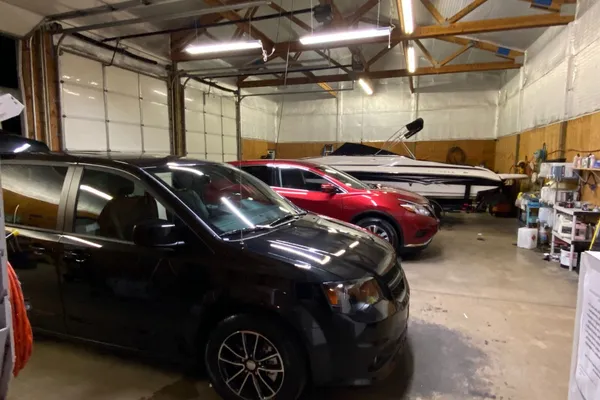
Before we touch a polisher to your vehicle in Salem, we look over the panels with you under good shop lighting. We point out what will polish out cleanly and what will stay, so you know what to expect before you pay for an hour of labor.
Where Swirl Marks Come From
Most swirl marks are wash marks. Chemical Guys explains that swirls are microscopic scratches carved into the clear coat by grit dragged across the surface.
Automatic brush car washes are a common culprit. Consumer Reports warns that the brushes in some automatic washes can trap dirt from other cars. Wiping dust off a dry hood with a paper towel, using a dirty wash sponge, or drying with rough bath towels does the same thing over time.
In Salem and across the Willamette Valley, wet roads leave fine road film along lower doors and rear hatches all winter. If that grit isn’t rinsed and washed off gently, every wipe grinds it into the clear coat.
How Paint Correction Works Step by Step
Real correction takes more prep than most people expect. Putting a spinning pad on dirty paint just creates more scratches.
- Hand wash the vehicle thoroughly to lift loose dirt, road film and mud from the panels, trim and door jambs.
- Decontaminate the paint chemically to break down road tar, embedded iron particles, brake dust and industrial fallout.
- Run a clay bar treatment over the clear coat so bonded contaminants that washing missed come off and the finish feels smooth.
- Tape off textured plastic trim, rubber seals and badges so polishing pads don’t stain or burn the edges.
- Machine polish the paint in one or more stages, matching the pad and compound to the paint’s hardness and defect depth.
- Wipe down the panels, inspect under bright light, and lock in the corrected surface with wax, paint sealant or a ceramic coating.
Some vehicles only need a single polishing pass to clear up light wash haze and bring back depth. Darker cars with years of brush washes, or trucks with heavy oxidation, take a cutting compound pass first and a finer finishing polish afterward to clear any compounding haze. The number of stages depends on the paint in front of us and how far you want to take it.
Paint Correction vs Wax, Sealant and Ceramic Coating
People mix these up all the time, so keep the split simple. Paint correction is repair. Wax, paint sealant and ceramic coating are protection.
Wax and sealants sit on top of the clear coat to shed water and road grime. Neither one levels scratches or removes oxidation on its own.
Ceramic coating works the same way. It bonds to prepared paint and adds years of environmental protection, which we cover on our ceramic coating page. Because a coating locks in whatever surface lies beneath it, putting ceramic over swirled paint just seals the swirls in place.
That’s why our ceramic coating packages include one stage of paint correction and at least three years of protection, starting at $950 for cars, $1,250 for midsize vehicles and $1,550 and up for larger vehicles. If a car needs extra correction beyond standard prep, we quote that separately up front.
Paint Correction Pricing in Salem, Oregon
At Willamette Auto Detail, paint correction and paint restoration are billed at $135 per hour at both of our Salem shops. Flat package pricing makes little sense for correction because a small coupe with light swirls and a neglected full-size black truck don’t take the same number of hours.
Other exterior restoration work sits right alongside correction when paint has heavy fallout. Overspray, tree sap, road tar and adhesive removal are also billed at $135 per hour, and polishing may follow if the residue left marks behind.
Hard water spot removal starts at $85. If cloudy headlights are aging the front of the car too, headlight buff and polish starts at $50 per headlight, or $75 per headlight with a new clear coat.
If your paint only has light haze and you want a full cleanup inside and out, a Complete Detail starts at $325 for a compact car and includes a three-step polish and hand wax. Full package rates are on our All Prices list, and our post on how much car detailing costs shows how standard details compare to hourly correction work.
Keeping Corrected Paint Looking Clean
Once the clear coat is leveled, keeping it that way comes down to gentle washing. Skip automatic brush washes. Use automotive car wash soap, rinse loose grit off first, and dry with clean microfiber towels instead of letting hard water bake onto the hood in the sun.
Protect the bare paint right after polishing. Wax works if you reapply it each season, a paint sealant starts at $195 and can last up to six months, and ceramic coating gives you at least three years of protection with easier washes.
Both of our Salem shops handle paint correction, on Lancaster Dr NE at (503) 585-6681 and on Aumsville Hwy SE at (503) 743-1110. Stop by for a quick look under our shop lights, or send a few photos through our contact form to get an estimate before you book.